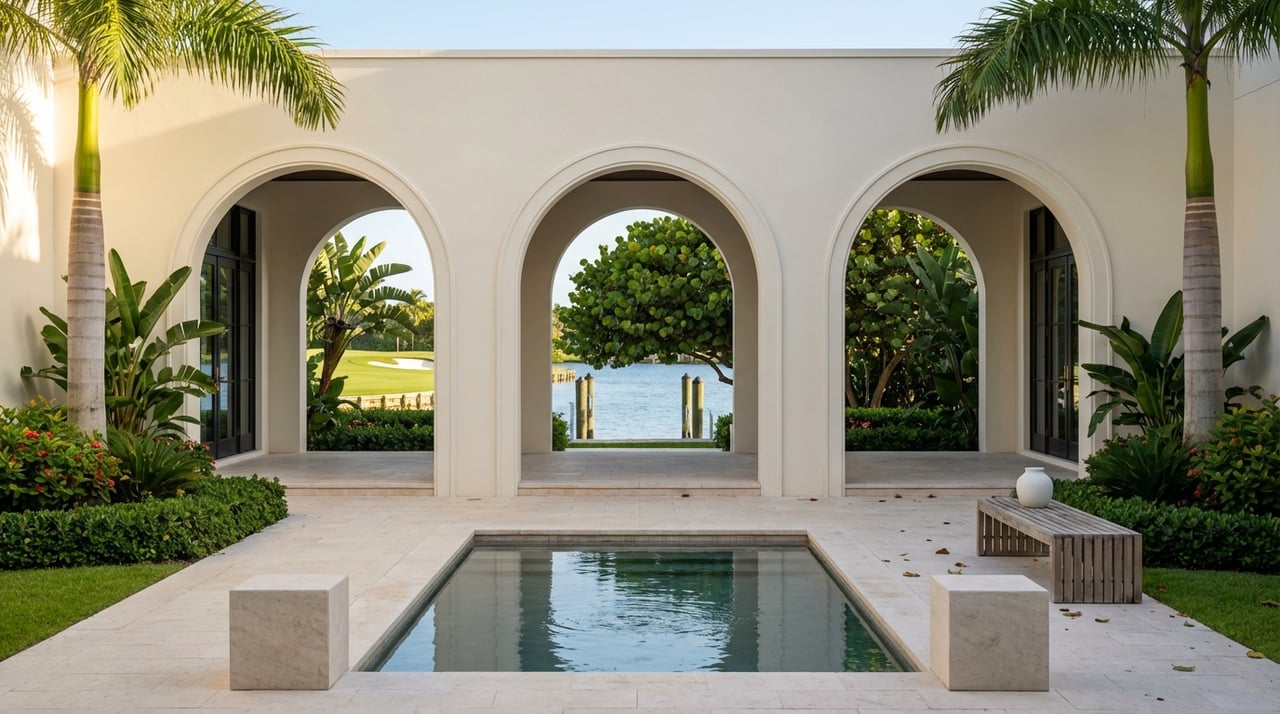
Shopping for a home in West Palm Beach or on Palm Beach Island and hearing the term “jumbo loan” at every turn? You are not alone. With many luxury and waterfront properties priced well above national medians, jumbo financing is common here. In this guide, you will learn what counts as a jumbo loan, how underwriting differs from standard mortgages, and how local coastal factors can affect your approval, timing, and carrying costs. Let’s dive in.
Jumbo loan basics in Palm Beach County
A jumbo loan is a mortgage that exceeds the conforming loan limit set each year by the Federal Housing Finance Agency. For 2024, the baseline one-unit limit is $766,550. In certain high-cost counties, that limit can be higher, up to $1,149,825. The exact threshold depends on the year and county designation.
In Palm Beach County, many single-family and luxury condo purchases exceed these limits. That makes jumbo financing typical for North and South End Palm Beach Island and for select West Palm Beach neighborhoods with higher price points.
How jumbo underwriting differs
Jumbo loans are not purchased by Fannie Mae or Freddie Mac. They are funded and held by private investors or banks, so guidelines vary by lender. Expect tighter standards than a standard conforming mortgage.
Credit, DTI, and down payment
Most jumbo lenders look for stronger credit. Many target scores of 700+, with the best pricing often reserved for 720–760+ profiles. Debt-to-income limits are usually tighter. Loan-to-value ratios are more conservative, with many lenders capping primary and second-home purchases near 80% LTV unless special programs apply. Some lenders offer higher LTVs with stricter conditions.
Typical jumbo down payments range from 10–25%, and many buyers choose 20% or more to access better pricing tiers and avoid extra risk conditions.
Reserves and documentation
You will likely need to document 6–24 months of reserves, measured in total monthly housing payments. Lenders also review income and assets in more depth. Self-employed buyers and those with complex portfolios should plan for additional verification and conservative treatment of non-recurring income.
Pricing and product features
Jumbo rates move with capital markets and lender strategy. Sometimes they price above conforming loans, and other times the spread narrows. Your final rate depends on credit, LTV, occupancy, and loan size. Product menus can be broader at private banks and portfolio lenders, including adjustable-rate mortgages and interest-only options for cash-flow planning.
Local Palm Beach factors that affect approval and costs
Owning near the ocean is a lifestyle choice, and it introduces unique considerations that lenders keep in view.
Flood and wind insurance
Many oceanfront or Intracoastal properties sit in FEMA Special Flood Hazard Areas. If the home is in one of these zones, your lender will require flood insurance. Separate windstorm or hurricane coverage is often required for coastal properties. Premiums can be higher due to Florida’s insurance market and reinsurance costs. Lenders may request elevation certificates, details on base flood elevation, or proof of mitigation features like impact glass and hurricane protection.
Condo and association scrutiny
Condo financing has faced stricter review since 2021. Lenders often require thorough project documentation, including budgets, reserves, insurance binders, meeting minutes, recertifications, and litigation updates. This is especially relevant for Palm Beach Island condos where associations may be handling structural assessments or special projects. Expect a more detailed and sometimes longer review for building approval.
Taxes, fees, and closing structure
Your total payment should reflect Palm Beach County property taxes, HOA or condo dues, and any special assessments that may apply in exclusive coastal neighborhoods. Florida closings include a title search and title insurance. Lenders will require a lender’s title policy, and you should budget for standard buyer closing costs.
What your lender will ask for
Jumbo files tend to be fuller than conforming files. Gathering documents early helps you move faster when you find the right property.
Income and employment
Salaried buyers can expect to provide a completed application, recent pay stubs, W-2s, and two years of federal tax returns. Self-employed buyers and business owners should plan for two years of personal and business tax returns, profit and loss statements, and balance sheets. Some lenders allow bank-statement programs depending on the loan size and profile.
Assets and reserves
Expect to share recent bank, brokerage, and retirement statements. Lenders verify liquid and non-liquid assets to ensure reserve requirements are met. For high-net-worth buyers, some portfolio programs allow asset-depletion or asset-qualifying methods to calculate income.
Property documents
A full appraisal is standard. For waterfront and coastal homes, you may be asked for an elevation certificate and proof of flood and wind insurance. Condo buyers should expect the lender to request association financials, insurance details, and estoppel letters.
Timeline expectations
Jumbo underwriting can take longer due to appraisal complexity, association review, and deeper asset verification. Build in additional time for underwriting touches, condo project approval, insurance binders, and any specialty inspections.
Rates and terms for luxury and second homes
Choosing the right structure is a balance between monthly cash flow, long-term interest cost, and how long you plan to hold the property.
Fixed-rate options
A 30-year fixed keeps monthly payments lower while spreading interest over a longer period. A 15-year fixed compresses interest costs but increases the monthly payment. High-net-worth buyers sometimes choose a shorter term to minimize total interest if the property will be held long term.
ARMs and interest-only choices
Adjustable-rate mortgages, such as 5- or 7-year structures, often price attractively for the initial fixed period. Some jumbo products include interest-only options that reduce near-term payments while preserving liquidity. These features introduce rate reset risk in the future, so consider your hold period and exit plan.
Second-home underwriting
Second homes and investment properties are underwritten more conservatively than primary residences. Expect higher reserve requirements, larger down payments, and sometimes higher rates. Lenders underwrite your capacity to carry payments year-round, even if you use the home seasonally.
Appraisals and comparables
Luxury properties in Palm Beach often have unique amenities like deep-water docks, private beaches, or bespoke architecture. Direct comparables can be limited, which may lengthen appraisal timelines and lead to additional reviews. Plan for this in your financing and contingency strategy.
Smart contract and timing strategy
You can reduce stress by aligning your financing plan with realistic contract deadlines.
- Build longer financing and appraisal timelines than you might for a standard loan, especially for unique waterfront or luxury properties.
- Consider a financing contingency that reflects jumbo review steps, including project approval for condos and insurance documentation for coastal homes.
- Confirm flood and wind insurance availability and premiums before waiving contingencies.
- If you are competing with cash offers, discuss appraisal gap strategies with your agent and lender in advance.
Your jumbo-ready prep checklist
Getting organized early helps you negotiate with confidence and close on time.
- Confirm the current conforming loan limit and whether your target price will require jumbo financing.
- Request a written pre-approval that outlines assumed rate, required down payment, reserves, and documentation.
- Gather two years of tax returns, recent pay stubs, and 2–3 months of bank and brokerage statements. Add business returns and P&L documents if self-employed.
- Inventory your liquid assets to confirm you can meet 6–24 months of required reserves.
- For coastal properties, pull a preliminary flood zone determination and obtain insurance quotes for flood and wind coverage.
- For condos, request association budgets, reserves, insurance, and recent meeting minutes as early as possible. Confirm any special assessments or recertifications.
- Plan extra time for appraisal, condo review, and insurance binders in your contract.
- Use a mortgage calculator to test payment scenarios, and build a pre-approval document checklist so nothing is missed.
Bringing it all together
Jumbo loans are part of everyday life in Palm Beach County’s luxury market. With the right preparation, they do not have to slow you down. Know the current limits, assemble documents early, and account for coastal insurance and condo reviews in your timeline. A clear plan will help you secure favorable terms and close smoothly on the home that fits your lifestyle.
If you are weighing options on Palm Beach Island or in West Palm Beach and want a discreet, step-by-step plan, connect with Megan Hamilton for concierge guidance from first call to closing.
FAQs
What is a jumbo loan in Palm Beach?
- A jumbo loan is any mortgage that exceeds the FHFA’s conforming limit for the year. For 2024, the baseline is $766,550, with higher caps in designated high-cost counties.
How much down payment do I need for a jumbo?
- Typical jumbo down payments run 10–25%, with many lenders preferring 20% or more for stronger terms.
Do jumbo loans require mortgage insurance?
- Conventional PMI is generally not used on large jumbo balances. Lenders manage risk with lower LTV requirements and higher reserves instead.
Will I need flood insurance on Palm Beach Island?
- If the property is in a FEMA Special Flood Hazard Area, lenders will require flood insurance. Many coastal homes also need windstorm or hurricane coverage.
Are condos on Palm Beach Island harder to finance?
- Condo projects face heightened scrutiny of building finances, insurance, recertification, and any litigation. Expect additional documentation and potentially longer timelines.
Are jumbo rates always higher than conforming rates?
- Not always. The spread changes with market conditions, your credit, LTV, and lender appetite. Strong profiles can see competitive jumbo pricing.