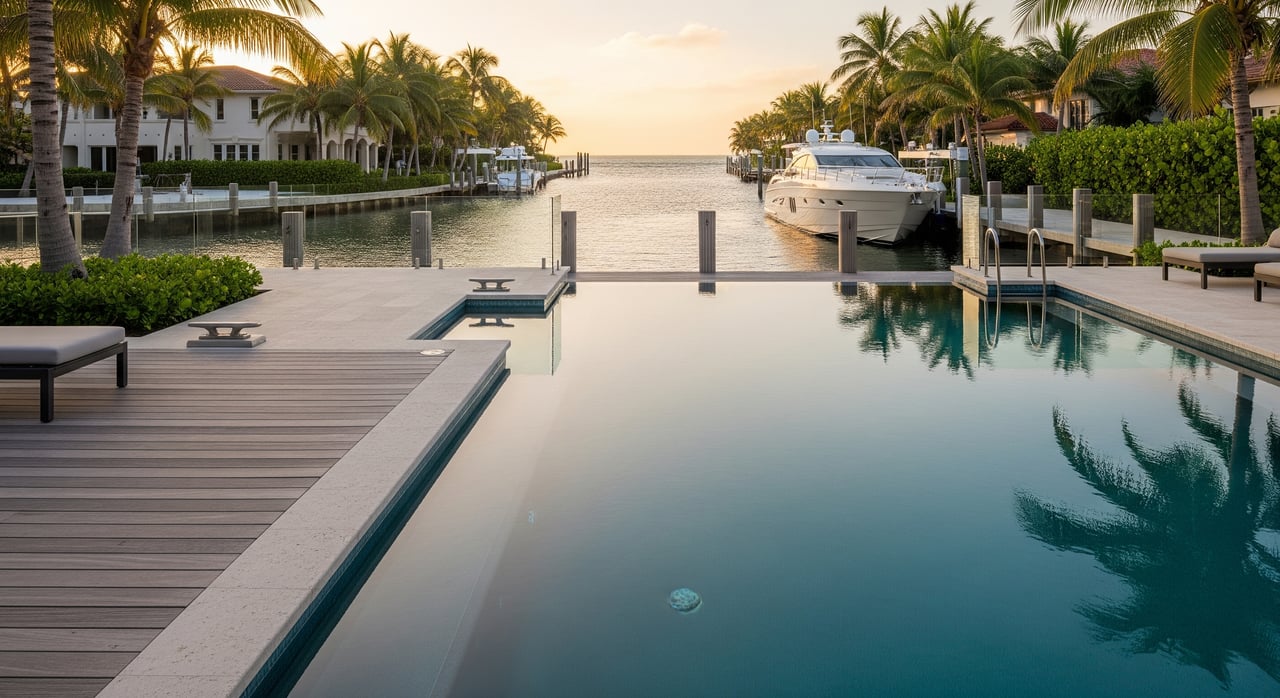
Dreaming of stepping from your backyard onto your boat, coffee in hand and blue water ahead? In Palm Beach County, you can choose between the calm convenience of the Intracoastal and the quick thrill of ocean access. Each offers a distinct lifestyle. The best fit depends on your vessel, how you like to boat, and how much maintenance you want to take on.
In this guide, you’ll learn how intracoastal and ocean-access homes differ in daily use, bridge and depth limits, permits, insurance, and marina access. You’ll also get a simple checklist to verify key details before you buy. Let’s dive in.
Intracoastal homes: calm water, easy days
Intracoastal homes in North Palm Beach and across the West Palm Beach–Boca Raton–Delray Beach corridor typically front the Lake Worth Lagoon or connecting canals. You get sheltered water, less swell, and easy cruising to waterfront dining and marinas.
- Smoother water for day boating. The lagoon and canals often feel calmer than the open ocean, which is ideal for family cruising, paddleboards, and relaxed social days.
- Convenient access to amenities. Many routes run along the Intracoastal Waterway, putting fuel docks, marinas, and on-water dining within simple reach.
- Speed and wildlife zones. Expect posted slow-speed and no‑wake sections, including manatee protection areas, that can extend travel times. Review the Florida Fish and Wildlife Conservation Commission’s boat speed and manatee zones to understand common restrictions along the ICW.
If your priority is relaxed cruising and proximity to services, intracoastal living offers a comfortable rhythm.
Ocean access homes: faster runs offshore
Ocean-access properties position you for quicker trips to the Atlantic, often with fewer narrow canals along the route. That can mean faster runs to fishing grounds and bluewater days on your terms.
- Quick inlet proximity. Homes near the Lake Worth Inlet and Port of Palm Beach area can shorten the jump from dock to ocean. Currents and tidal flow are stronger around inlets, so plan passages with conditions in mind.
- Better fit for larger, deeper boats. If you run a sportfish or cruising yacht, a deeper, straighter route to the ocean can reduce bridge constraints and tight turns.
- More exposure to conditions. You will feel tidal exchange and weather more than in a quiet canal. Ocean approaches can be choppy, so timing and experience matter.
If offshore fishing and open-water freedom drive your lifestyle, ocean access often wins.
Bridges, depths, and daily boating realities
Bridge clearances and schedules
Bridges determine what you can pass under and when. Fixed bridges have a set vertical clearance, while drawbridges open on a schedule or on request. Your vessel’s air draft decides the plan.
- Verify before you buy. Use authoritative sources to check current clearances and opening times, including NOAA nautical charts, the U.S. Coast Guard’s Local Notices to Mariners, and local harbormaster offices. Schedules and restrictions can change with maintenance or season.
- Plan for timing. If your route requires multiple openings, your transit to the inlet can take longer, especially during busy times.
Depths, dredging, and canal conditions
Depth varies across the lagoon and private canals. Main ICW channels are marked and maintained more consistently than smaller canals. Shoaling can occur, especially in secondary waterways.
- Confirm real depths. Ask for recent soundings, consult NOAA chart notes, or hire a marine surveyor to check the path from the dock to the ICW and inlet.
- Know who maintains what. Some canals are the owner’s or HOA’s responsibility to dredge. Permits for dredging and in‑water work are often handled through Palm Beach County Environmental Resources Management and the U.S. Army Corps of Engineers Jacksonville District. Factor future maintenance into your budget and timeline.
Speed zones, manatees, and enforcement
Slow-speed and no‑wake zones protect shorelines and wildlife. You will see them across the lagoon, canals, and near inlets. These zones can affect how fast you reach planing speeds and where tow sports are practical.
- Learn the map. Review the FWC’s boat speed and manatee protection information to understand typical limits in Palm Beach County.
- Expect enforcement. The Florida Fish and Wildlife Conservation Commission and local marine units, including the Palm Beach County Sheriff’s Marine Unit, patrol posted zones.
Marina and service access
Private docks vs. marina slips
Many homes include private docks with pilings, finger piers, and boat lifts. You will want to confirm dock length, width, depth alongside, and permitted lift capacity. If your vessel exceeds private dock limits or you want full-service support, a nearby marina can be essential.
- Full-service options. Larger marinas offer deeper slips, fuel, haul-outs, and repair crews. If you cruise on a yacht or sportfish, access to a yard with the right travel lift is a key consideration.
- Finding the right fit. Use a marina directory such as ActiveCaptain to check slip depths, services, and transient availability, then confirm details directly with the marina.
Liveaboards and seasonal demand
Liveaboard policies vary by marina, municipality, and HOA. Winter brings higher demand for transient slips. If you intend to live aboard or host guests on your vessel, confirm policies, utilities, and pump-out services well in advance.
Maintenance, permits, and insurance
Waterfront living comes with unique upkeep and compliance. Planning ahead prevents surprises after closing.
- Seawalls and docks. Many properties rely on seawalls and bulkheads that must be kept to code. Repairs or replacements generally require permits through Palm Beach County ERM, and in many cases state or federal approvals.
- Dock and lift projects. New pilings, boat lifts, or dock extensions typically need permits. Local HOA covenants can further restrict length, lift type, or number of vessels.
- Flood and wind coverage. Many waterfront homes fall within FEMA flood zones, which can influence insurance requirements and premiums. Use the FEMA Flood Map Service Center to identify a property’s flood zone and discuss implications with your insurer.
- Boat and hull maintenance. Saltwater operation increases corrosion and service frequency. Resources from BoatUS outline best practices for bottom paint, anodes, and engine care so you can plan realistic annual upkeep.
Which waterfront fits your lifestyle
Use this quick guide to narrow your focus. Always verify bridge clearances, depth, and HOA or municipal rules for any specific property.
- Large cruising yacht over 40 feet, deeper draft. Favor ocean-access properties with deep-water slips or homes near full-service marinas. Confirm fixed bridges, channel depth, and haul-out capacity.
- Offshore fishing and fast runs. Look for homes with quick, low‑restriction routes to the Lake Worth Inlet. Check posted speed zones along your typical path.
- Family cruising and social boating. Intracoastal and lagoon-front homes offer calm water, easy restaurant hops, and less exposure to swell.
- Kayaks, paddleboards, and casual shore fishing. Shallow canal or lagoon properties provide low-stress access right from your yard or community dock.
- Liveaboard or extended stays. Confirm marina liveaboard policies and utilities, or seek oceanfront homes with private deep slips if allowed by local codes and HOA rules.
Smart due diligence checklist
Before you write an offer on a waterfront property, verify the details that will define your day-to-day boating.
- Bridge clearances and opening schedules for your route. Check NOAA nautical charts and cross-check any temporary changes in the U.S. Coast Guard Local Notices to Mariners.
- Depth from dock to the ICW to the inlet at low tide. Ask for recent soundings or hire a marine surveyor; confirm who maintains canal depth.
- Dock dimensions, permitted lift capacity, and piling condition. Review surveys, permits, and any shared dock easements.
- Seawall condition and maintenance responsibility. Contact Palm Beach County ERM for permit history and standards.
- Required permits for planned work. Many projects involve Palm Beach County ERM and the USACE Jacksonville District; plan for timelines and environmental reviews.
- Flood zone and insurance. Verify zones through FEMA’s Flood Map Service Center and discuss windstorm and flood coverage with a licensed agent.
- Posted speed and manatee zones along your route. Study FWC maps to estimate realistic transit times.
- Nearby marinas and service yards that match your vessel’s needs. Use a directory such as ActiveCaptain and confirm details directly.
Local insight: North Palm Beach and the Lake Worth Lagoon
The Intracoastal here follows the Lake Worth Lagoon, with many homes on connecting canals that lead to the marked ICW. This setting delivers calm, protected water that suits day boating and watersports. If you plan regular offshore runs, homes with fewer bridges and a straighter path to the Lake Worth Inlet can save time and reduce complexity.
Near the Port of Palm Beach area, expect stronger currents and more traffic. That can be a plus for seasoned boaters who want quick bluewater access but adds a layer of timing and seamanship. Either way, you get a year-round boating lifestyle that can be tailored to your comfort and your craft.
Your next step
Choosing between intracoastal and ocean access comes down to how you boat, not just where you live. With clear priorities and careful verification, you can enjoy a seamless waterfront experience from day one.
If you want a local plan that fits your vessel, insurance profile, and maintenance goals, connect with a trusted advisor who navigates these details every day. Reach out to Megan Hamilton to compare properties, confirm route constraints, and secure the right waterfront for your lifestyle.
FAQs
What is the difference between intracoastal and ocean-access waterfront in Palm Beach County?
- Intracoastal homes front the Lake Worth Lagoon and canals with calmer water and more no‑wake zones, while ocean-access homes offer quicker routes to the Atlantic but with stronger currents near inlets and more exposure to weather.
How do bridge clearances affect my boat choice and route?
- Your boat’s air draft determines if you can pass under fixed bridges or must wait for drawbridge openings; always verify current clearances and schedules on NOAA charts and USCG Local Notices to Mariners before committing to a property.
Do I need permits to repair docks or seawalls at a waterfront home?
- Most dock, lift, and seawall work requires permits, often through Palm Beach County ERM and the USACE; factor permit timing and potential environmental reviews into your plans.
How do manatee and speed zones impact daily boating from a canal home?
- Posted slow-speed and no‑wake areas can extend transit times to the inlet and limit tow sports in narrow canals; review local FWC maps to set realistic expectations.
What insurance considerations come with waterfront properties here?
- Many homes sit in FEMA flood zones that can impact coverage requirements and premiums; windstorm and boat insurance costs may be higher along the coast compared to inland areas.