Buying waterfront in North Palm Beach can feel like buying a lifestyle and a property at the same time. The view may grab your attention first, but the details behind boat access, flood exposure, permits, and maintenance often determine whether the home truly fits how you want to live. If you are considering a waterfront purchase here, knowing what to verify before you close can help you avoid expensive surprises and make a more confident decision. Let’s dive in.
Start With Boat Access
On paper, a home may sound ideal because it sits on the water or advertises ocean access. In practice, the real question is whether your actual boat can comfortably and reliably get from the dock to the inlet.
Palm Beach County maintains eight bascule bridges over the Intracoastal Waterway and staffs bridge tenders 24/7, according to the Palm Beach County bridge section. In the North Palm Beach area, nearby bridge openings listed by county and NOAA guidance include Donald Ross at mile 1009.3 on the hour and half hour, PGA Boulevard at mile 1012.6 on the hour and half hour, and Parker, or US-1, at mile 1013.7 on the quarter and three-quarter hour.
That schedule matters more than many buyers expect. If you plan to head out early, return at sunset, or use a taller vessel, one bridge or one delay can change how convenient the property really is.
Verify the Full Route
Before you move forward, confirm the route from the dock to the inlet with real numbers, not listing language. NOAA advises using current chart data and official notices when determining bridge clearance, which is why route verification is such an important part of waterfront due diligence.
Focus on these points:
- Your boat’s air draft or mast height
- The lowest fixed span on the route
- The opening schedule for each drawbridge along the way
- Whether wake zones, bridge timing, or seasonal traffic could make the trip impractical
The best approach is to test the route using the actual boat you plan to keep there. That gives you a much clearer picture than a general claim like “ocean access.”
Think Beyond the View
A waterfront home is not just about whether you can see the water. It is also about how that water feels from the house, patio, and dock during the times you will actually use the property.
In North Palm Beach, the difference between open-water exposure, a protected lagoon setting, and a canal-facing lot can shape privacy, light, wind, and day-to-day enjoyment. A property that looks perfect in photos may feel very different in person depending on the angle, lot orientation, and surrounding shoreline.
Visit at the Right Time of Day
If possible, tour the property from both the interior and the dock at the time of day you expect to enjoy it most. Morning light, afternoon heat, glare, and privacy can all vary significantly based on orientation.
This is especially important on waterfront lots, where the livability of the site can be just as important as interior finishes. A polished kitchen can be updated later. The way a property sits on the water is much harder to change.
Check Flood Zones and Evacuation Zones
One of the most important things to understand is that flood zones and evacuation zones are not the same. Palm Beach County notes that evacuation zones relate to storm surge, while flood zones reflect risks such as poor drainage, sheet flow, and coastal tides on its Know Your Zone page.
That distinction matters because a property may have one type of exposure, both, or neither. You should review each one separately rather than assuming they mean the same thing.
North Palm Beach Flood Maps Are Changing
North Palm Beach’s flood-zone guidance says FEMA has been redefining flood-map areas and that about 1,400 village properties may move into AE zones. The county also states that the pending map changes became effective on Dec. 20, 2024.
For buyers, that may affect both risk planning and ownership costs. If a property moves into a higher-risk zone, lenders may require flood insurance for financed purchases.
FEMA also notes on its homeowner flood risk page that flood insurance may still be worth considering even outside a high-risk zone because flooding can happen anywhere. If an owner believes a flood map is incorrect, the village directs owners to FEMA’s Letter of Map Change process.
Questions To Ask Before You Buy
When reviewing a waterfront property, it helps to ask:
- Is the parcel in a flood zone?
- Is the parcel also in an evacuation zone?
- Has the flood designation recently changed or is it expected to change?
- What would flood insurance likely cost under the current map?
These are property-specific questions, so they should be verified directly rather than assumed from marketing photos or broad neighborhood descriptions.
Inspect the Waterfront Structures Separately
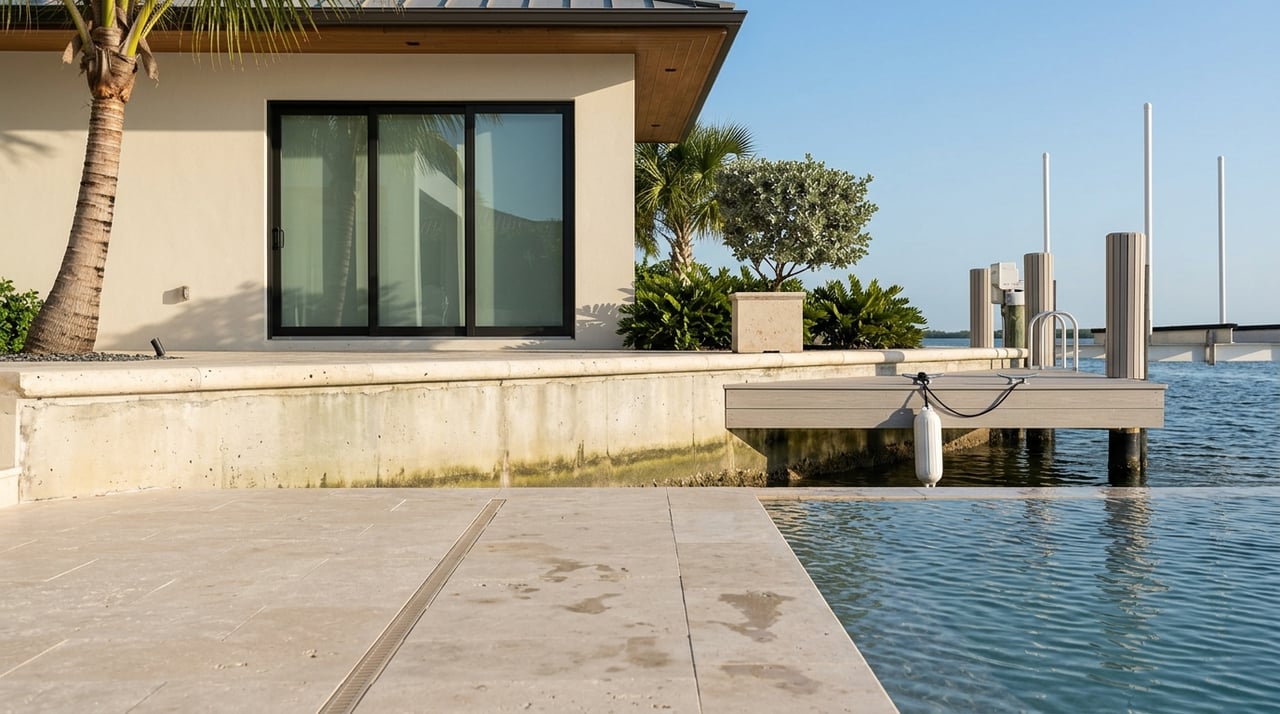
One of the biggest mistakes waterfront buyers make is assuming the standard home inspection covers everything. In Florida, standard home-inspection requirements do not require an inspector to evaluate swimming pools, seawalls, break-walls, boat lifts, or docks, according to the state home inspection standards.
That means a waterfront purchase needs a second layer of diligence. The house itself is only part of what you are buying.
What To Review Closely
Ask for records and inspection insight on:
- The age and condition of the seawall
- The age, materials, and apparent condition of the dock
- The age and function of any boat lift
- Any storm-related repairs or emergency work
- Electrical and structural components tied to the dock or lift
These items age differently than the residence and often carry different repair costs. A beautiful home can still come with major waterfront infrastructure issues if these components have not been maintained properly.
Review Permit History Before Closing
Permitting matters on waterfront property because not every dock, lift, seawall repair, or shoreline project is handled the same way. The Florida Department of Environmental Protection explains in its dock permitting guide that projects may fall into exempt, general-permit, or individual permit categories.
Its Beaches, Inlets and Ports Program also notes that in-water work can involve environmental resource permits and, where applicable, authorization to use state-owned submerged lands. In other words, even relatively modest waterfront improvements can have a more complex approval path than buyers expect.
Ask for the Paper Trail
Before closing, request the permit and repair history for:
- Seawalls
- Docks
- Boat lifts
- Shoreline protection work
- Post-storm repairs
The South Florida Water Management District states in its applicants handbook that seawall or shoreline-protection restoration may proceed without a permit only in limited situations. Otherwise, permit review may be required.
That is why it is smart to confirm not only that improvements exist, but also that the current structures appear consistent with recorded permits. If they are not, future repairs or modifications may be harder than expected.
Understand Condo and HOA Dock Rules
If you are buying a condo, townhome, or property within an association, the waterfront component may come with another set of rules. Dock or slip rights are not always as simple as they appear in a listing.
Under Florida law, condominium and homeowners’ association records must be made available in specific ways to owners after written request. The Florida statutes for condo records explain that official records are open to inspection, and HOA records generally must be made available within 10 business days.
Key Questions for Association Properties
Review the governing documents, budgets, rules, minutes, and any dock or slip addenda to confirm:
- Whether the slip is deeded, leased, or assigned
- Whether boat lifts are allowed
- Whether there are limits on boat length or use
- Whether alterations or repairs require association approval
- What exactly conveys with the sale
These details can directly affect how you use the property and what flexibility you will have after closing.
Build the Right Waterfront Due-Diligence Team
A North Palm Beach waterfront purchase usually needs more than a standard home-buying checklist. Because the marine side of the property carries its own risks and maintenance profile, it helps to assemble specialists early.
A strong due-diligence team may include:
- A general home inspector for the residence
- A marine or dock specialist for the waterfront structures
- A flood insurance agent to help price current risk
- A title or closing professional to confirm what conveys
- Document review support when dock or slip rights are unclear
If a dock, seawall, or lift shows movement, corrosion, or signs of storm damage, you may also need a contractor or engineer to evaluate repair scope. The goal is to understand the property as a waterfront asset, not just as a house with a view.
Focus on Fit, Not Just Curb Appeal
The strongest waterfront purchase is the one where the lifestyle and the logistics actually line up. Boat route, bridge timing, flood exposure, dock condition, insurance, and association rules all need to work together.
When one of those pieces is overlooked, the cost and complexity of ownership can outweigh the appeal of the setting. When they do work together, waterfront living in North Palm Beach can be every bit as rewarding as buyers hope.
If you want guidance that blends local waterfront insight with careful transaction management, Megan Hamilton offers a polished, hands-on approach designed to help you evaluate each detail with confidence.
FAQs
What should you verify before buying a waterfront home in North Palm Beach?
- You should verify the boat route to the inlet, bridge clearances and schedules, flood and evacuation zone status, dock and seawall condition, permit history, and any association rules that affect slips, lifts, or boat use.
How do bridge schedules affect a North Palm Beach waterfront purchase?
- Bridge schedules can affect when and how easily you can reach the inlet, especially if your boat has height limitations or you plan to use it at specific times of day.
Do standard home inspections cover docks and seawalls in Florida?
- No. Florida’s standard home-inspection requirements do not require inspectors to evaluate docks, seawalls, break-walls, boat lifts, or pools, so separate specialist inspections are often appropriate.
Why do flood zones matter when buying waterfront in North Palm Beach?
- Flood zones can affect insurance requirements, ownership costs, and risk planning, and North Palm Beach has noted map changes that may move some properties into AE zones.
What should you review in a condo or HOA waterfront purchase in North Palm Beach?
- You should review governing documents, rules, budgets, minutes, and any dock or slip addenda to confirm whether the slip is deeded, leased, or assigned and whether there are limits on lifts, boat size, use, or alterations.